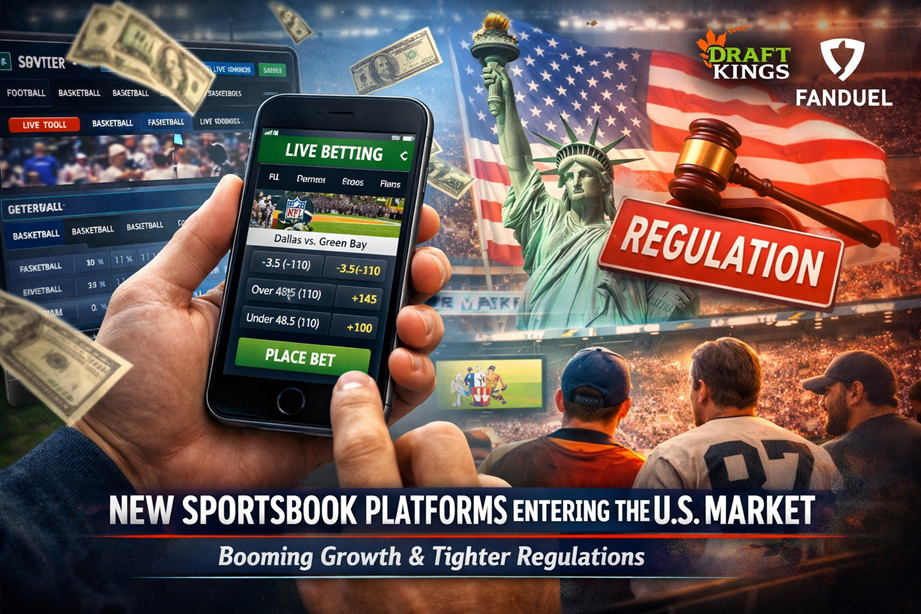
The US sports betting market has danced well past its early stages. What began as a slow and steady rollout in just a few states has now pranced into a continuous, exciting expansion. More regions are now opening regulated markets, and a huge number of operators are eager to join the scene.
The momentum is going strong, with launches happening smoothly alongside new partnerships, licensing agreements, and thoughtful strategies specifically matched to each state. For operators, entering the US market now requires more than just availability. It requires positioning.
Expansion Is Still Driving New Entrants
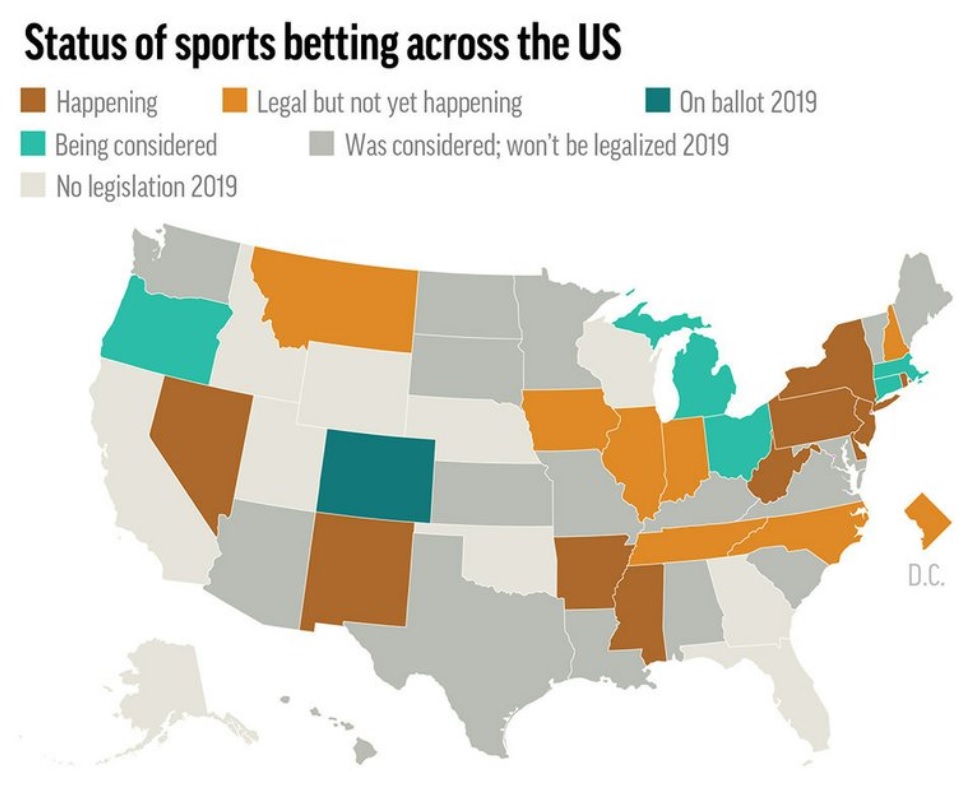
Every time a new state legalizes sports betting or expands its framework, it opens up a fresh opportunity for operators to enter. States like North Carolina and Vermont have recently added to the growing list, while larger markets continue refining their existing structures.
This ongoing expansion is one of the main reasons why new sportsbook platforms continue to launch. Operators are not only targeting newly regulated states but also looking for ways to stand out in already very competitive regions.
Some may focus on niche audiences, while others enter through partnerships with local casinos or media brands. The goal is always to find a way into the market that gives them a clear identity from day one.
Partnerships Are Shaping How Platforms Launch
One of the most noticeable trends in recent launches is the role that partnerships play. Operators rarely enter a state alone. Instead, they’ll work with technology providers, data companies and established local entities to build a stronger foundation for themselves. These partnerships allow for new platforms to launch faster and operate more smoothly from the very beginning.
It also means that many platforms share underlying technology, even if the players’ experience feels different on the surface. The competition then leans toward design, usability and how each operator connects with its audience. Bettors usually notice this showing up as subtle differences in how platforms feel to use, even when the core function is similar.
Standing Out Is Getting More Difficult
As more platforms are entering the market, standing out is increasingly challenging. Early entrants benefited from being among the first available options, while newer platforms don’t have that advantage. They’d need to give players a reason to switch or at least try something different.
This is where product experience starts to matter more in the overall picture. Faster interfaces, cleaner layouts and smoother onboarding processes are becoming key factors in how new platforms are received, with a fast-growing emphasis on how clearly platforms present information. Odds, markets and navigation need to feel intuitive, especially for those who are comparing multiple options at once.
Bettors Are Actively Exploring New Platforms
With all these extra options available, player behavior has started to change. Bettors are no longer interested in sticking to a single platform without question. Many are now exploring what’s new, comparing features and looking for platforms that match their preferences.
This is particularly noticeable in the newly regulated states, where players are encountering multiple operators for the first time.
In that context, resources that highlight top-rated new sportsbooks for US players have become a large part of how people are searching through the market. These kinds of listings give a thorough overview of recently launched platforms, helping players understand what’s available to them and how different operators are positioning themselves within specific states.
Technology Is Quietly Driving Competition
While branding and marketing are clearly visible, much of the competition happens behind the scenes.
Platform stability, speed and data integration are all important parts of how a sportsbook performs under real conditions. New operators are investing heavily in these areas, usually working with established technology providers to make sure that they can handle the high demand from the outset.
This focus on infrastructure is especially important during major sporting events, as the massive spikes in activity can test the limits of a platform. Operators that perform well during these moments tend to build stronger reputations over time as they don’t slow anyone down from what’s important.
What This Means for the Industry
The continued arrival of new sportsbook platforms shows that the market is still steadily growing, even as it becomes more competitive. For operators, the challenge isn’t just entering the market but maintaining relevance once they’re there. For players, the large number of options leaves far more choice but also requires more awareness when deciding where they’re going to engage.
According to reports, the US sports betting market continues to see steady growth in both participation and revenue, which just goes to show the ongoing expansion across states. That growth shows that new entrants will continue to appear, each trying to find their place in an increasingly crowded space.
A Market That’s Still Finding Its Shape
Despite how far the industry has come, it is still evolving. New states will continue to open, operators will keep launching and partnerships will always shape how platforms are built and delivered. The structure may be more defined than it was a few years ago, but there is still a lot of room for movement.
For anyone following the industry, that makes it one of the more dynamic areas to watch, and for bettors, it means the range of options is only going to keep expanding.

Half of US offers legal sports betting as NFL season begins
EAST RUTHERFORD, N.J. (AP) — More than half of the...
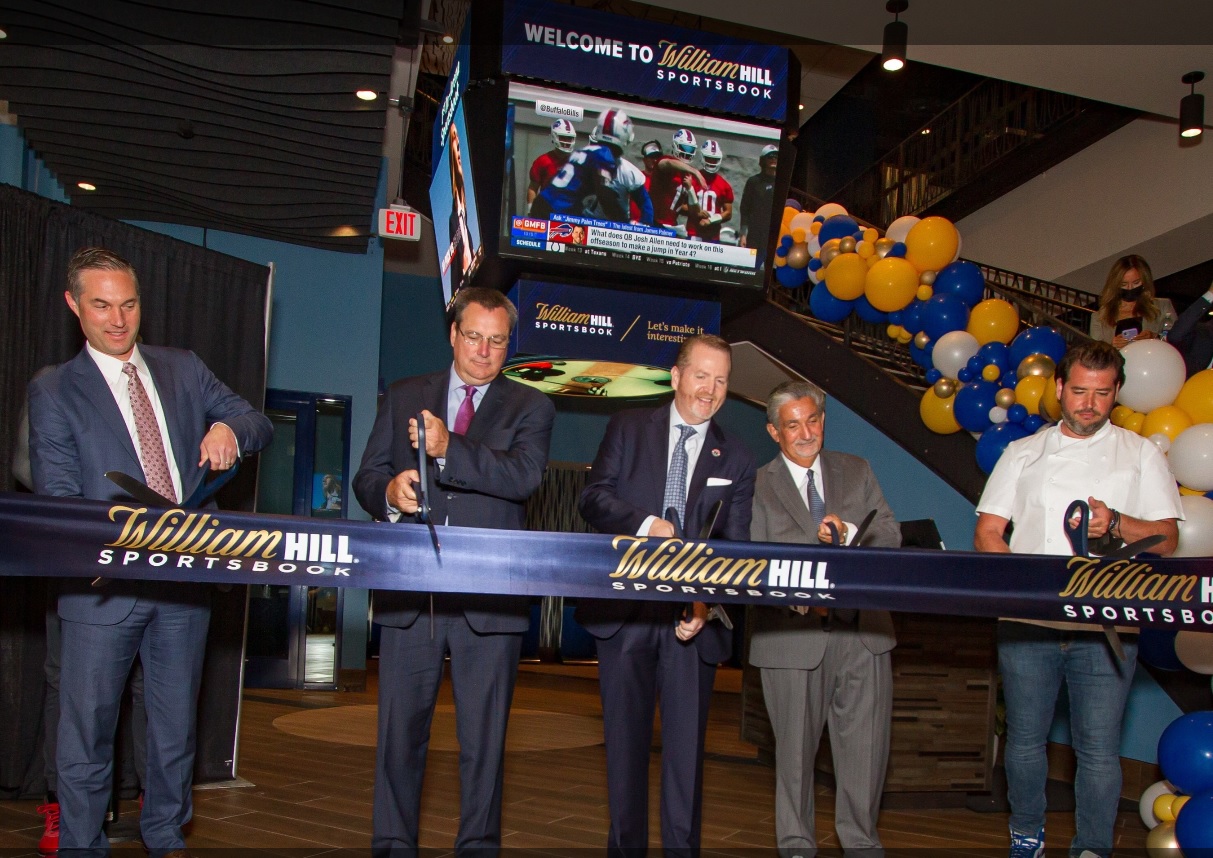
William Hill Sportsbook Officially Opens at Capital One Arena in Washington, D.C.
WASHINGTON, May 26, 2021 /PRNewswire/ -- Marking a...
William Hill US and Mescalero Apache Tribe Announce New Sports Book at Inn of the Mountain Gods Resort & Casino in New Mexico
LAS VEGAS (June 24, 2019) – William Hill US, ...
Sports betting is days away from becoming legal in Indiana
INDIANAPOLIS (AP) — Sports betting is days away fr...

Caesars now operates sportsbooks in seven states at nearly 30 venues
29 Sports Betting Locations Across Seven States by...