
1xBet regularly conducts large-scale studies to gain insights into the markets where it leads the gambling industry. After Europe and Africa, it is now the turn of Latin America – a region that in recent years has often been called fast-growing. The study revealed it’s time to move past this cliché, as Latin America is now not only adapting to global challenges but also setting its own trends.
One of the leading international experts in iGaming and a key voice in the study, Simon Westbury, notes that over the past few years, Latin America has moved from offshore dominance to full participation in the global discussion on safe gambling.
The study conducted with SBC Media shows that the region is undergoing a major technological and institutional transformation. Survey participants – including market operators (senior executives), regulators, gaming law experts, and industry association representatives – confirm this trend.
Latin America is aiming for stable regulation, achievable through the “three C” concept: Communication, Consistency, and Clarity. These principles are already helping the region’s markets move from chaotic growth to a mature development model.
Technology as foundation for player protection
A key finding of the study was the rapid adoption of player protection tools. Latin America is showing impressive progress, outpacing many other developing regions in operator technology.
Here are just a few of these indicators:
- 84% of operators have implemented KYC (Know Your Customer) protocols – a rate higher than in Europe and Africa
- 69% of companies use real-time activity monitoring, allowing instant response to abnormal user behavior
- 34% of companies already use AI algorithms to detect signs of gambling addiction
Concerns about potential fraud, still unfortunately common in the region, are driving the rapid adoption of KYC. The focus on player activity and monitoring reflects recent updates to regulatory frameworks based on global best practices. AI is being used to detect risks before they lead to serious social consequences.
Payment infrastructure and KYC as security factor
Player safety in the modern world is closely linked to the quality of payment infrastructure. It’s important to note that the situation in the region remains far from ideal: approximately 50% of operators surveyed cited technical difficulties as the primary obstacle to improving player safety. In some countries, particularly Mexico and Colombia, issues related to the source of funds were identified as the main barrier to providing players with the highest level of protection.
Effective KYC and AML (anti-money laundering) mechanisms allow operators to block suspicious accounts and prevent fraud quickly. At the same time, the degree of formalization in Latin America’s banking sector directly affects transaction transparency and varies across countries. Improvements can happen quickly – for example, the implementation of a new online gambling law in Peru in 2022 was, according to survey participants, a key factor in improving the gambling sector’s reputation.
The development of Open Banking, licensing of payment providers, and the implementation of anti-fraud scoring systems create an additional layer of protection. The technological maturity of the region’s financial market ensures that players’ funds are secure and that operational processes are accountable to the government.
Challenges: from technology to culture
Despite the technological leap, the study identified several areas with room for growth. Technology alone is not the only barrier. Today, the level of communication with players and consideration of their cultural differences is as important.
Currently, only 19% of Latin American operators carry out affordability checks on their clients, compared with 11% in Africa and 33% in Western Europe. Another notable aspect of player protection in Latin America is the lack of limits on bonus offers. While about half of operators in other regions set promo limits for new and existing players, in Latin America, only 16% of surveyed operators impose such restrictions.
Players in Latin America often see betting as a way to make money rather than as entertainment. As a result, limits can lead them to adopt more aggressive strategies, increasing their risk.
The conclusion is clear: technological progress must be accompanied by extensive educational efforts. Operators and the government need to engage in a more active dialogue with the public to clarify the principles of responsible betting.
Conclusions
The 1xBet and SBC Media study emphasizes that market regulation is only possible with a solid legal framework. This factor, along with active educational efforts with the audience, makes player protection mechanisms effective. It is important to note that survey participants understand this well.
The positive trend in the region is clear. This means we can expect improvements and solutions to current challenges, even in difficult situations such as underage betting, fraudulent activities, or market shadowing in certain countries. The widespread adoption of KYC, active real-time monitoring, and AI integration indicates that Latin America is already among the leaders in ensuring player safety and improving responsible gaming standards. In addition, transparent regulation strengthens affiliate marketing by minimizing manipulative advertising and reducing the risks of promoting illegal platforms, creating fair rules for all participants in the ecosystem.
An example of how effective operating principles improve the market is the 1xPartners affiliate program, which already has over 500,000 participants. Numerous international awards confirm the program’s high quality, and you can be confident that 1xBet will continue to set new standards in betting.

Half of US offers legal sports betting as NFL season begins
EAST RUTHERFORD, N.J. (AP) — More than half of the...
American Gaming Association Releases New Responsible Marketing Code for Sports Betting
Today, we’re proud to release the industry’s first...
William Hill US and Mescalero Apache Tribe Announce New Sports Book at Inn of the Mountain Gods Resort & Casino in New Mexico
LAS VEGAS (June 24, 2019) – William Hill US, ...

William Hill Sportsbook Officially Opens at Capital One Arena in Washington, D.C.
WASHINGTON, May 26, 2021 /PRNewswire/ -- Marking a...
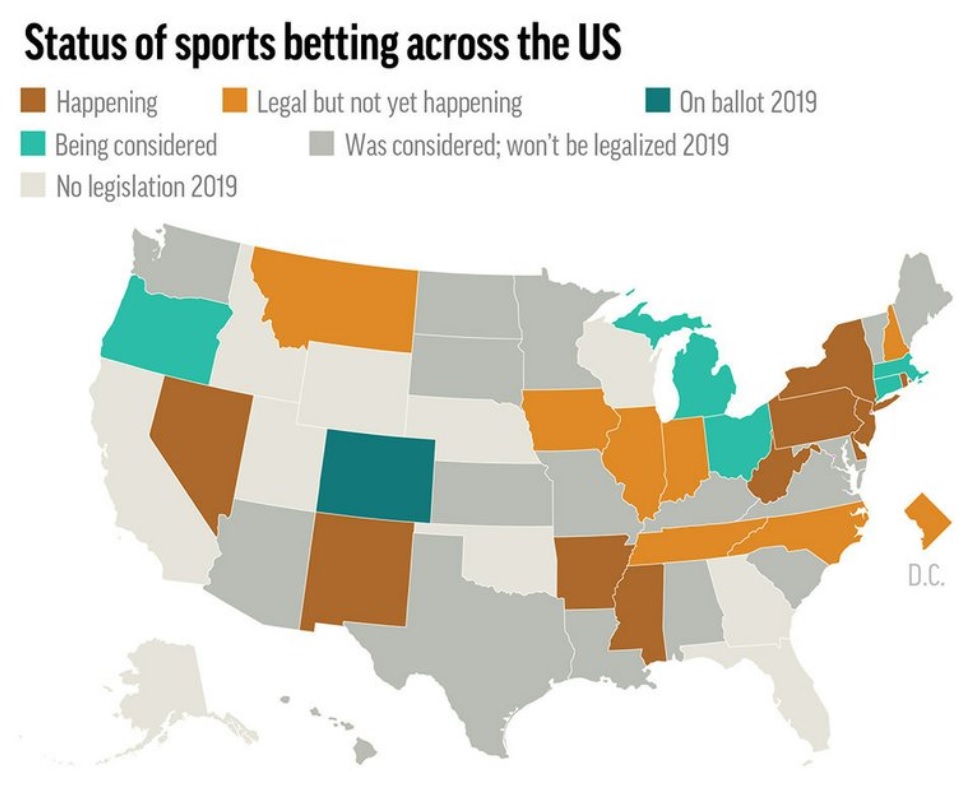
Sports betting is days away from becoming legal in Indiana
INDIANAPOLIS (AP) — Sports betting is days away fr...