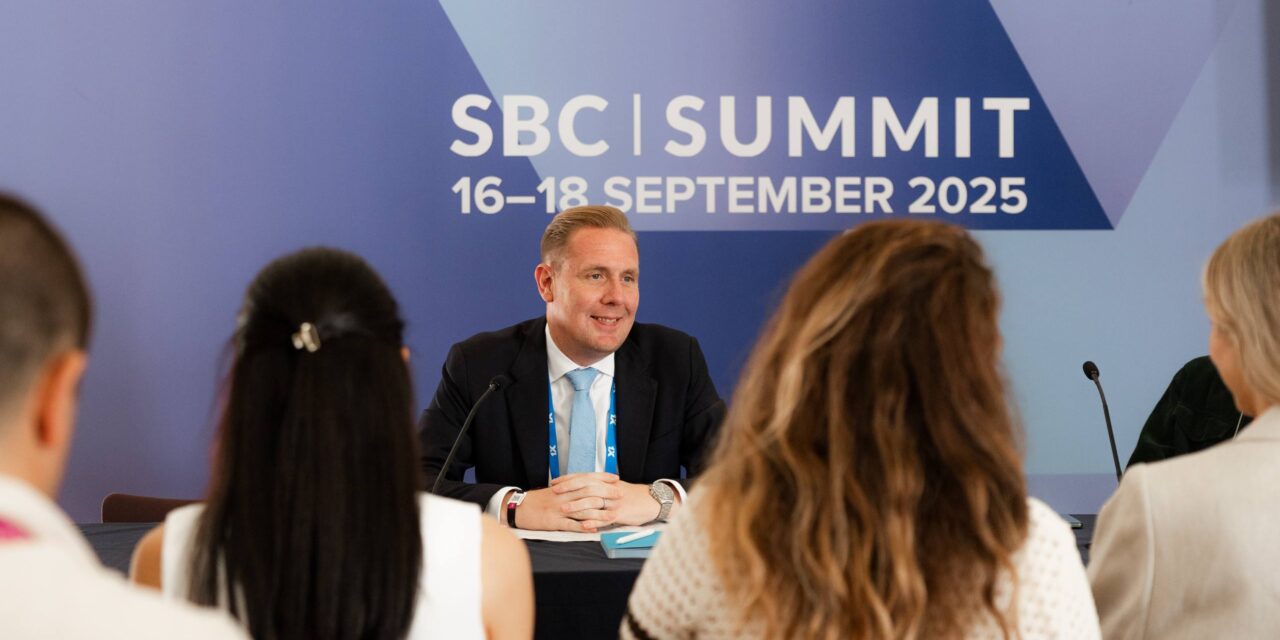

Simon Westbury has long been regarded as one of the sharpest strategic thinkers in the global iGaming space, with a career spanning B2B, sports betting, and casino.
Having worked both as a supplier and now in an advisory role to one of the world’s largest operators, 1xBet, he brings a unique “poacher-turned-gamekeeper” perspective to the table. His experience across regulated markets, particularly in Western Europe, and his ability to bridge strategy with execution give him a distinctive voice at a time when the industry faces rapid change.

In this exclusive interview with Sports Betting Operator, Westbury outlines how 1xBet is pursuing sustainable expansion in Europe, Africa, and Latin America, while strengthening its credibility with regulators and players alike. He speaks candidly about the importance of engagement over compliance, the role of innovation grounded in player needs rather than hype, and why retention is just as critical as acquisition. From leadership culture to personalisation powered by technology, Westbury offers an inside view on how one of the biggest names in sports betting and casino intends to build long-term success.
Q: You’ve worked extensively across B2B and sports betting. How will those experiences shape the guidance you’ll provide to a global operator like 1xBet?
Simon: Good question. This is a journey 1xBet and I have embarked on together, and I see it as a long-term project. On the B2B side, I spent years trying to work with operators like 1xBet who are one of the biggest in the world and so it’s a natural fit now. We’re committed to growth in regulated markets, especially Western Europe, where I’ve got deep experience.
It’s a bit poacher-turned-gamekeeper: I understand how B2B pieces interlink and how to translate that into operator value. And 1xBet is huge—there’s a lot I can learn here too, which is one reason I took the role. I bring B2B, sportsbook, and casino; 1xBet brings a proven, global footprint.
Q: 1xBet already has a strong international footprint. Where are the biggest opportunities for further growth—in sportsbook and casino?
Simon: You’ll see news soon that answers this directly. High level: we hold licences in Spain and Ireland and we’re seeking further expansion in Western Europe; those licences carry credibility. We’re very strong in Africa, and we now hold 35+ licences worldwide. You can’t talk regulation without LatAm; we’re active there and there may be more licence news coming. In short: regulated, sustainable expansion across Europe and LatAm while consolidating what we’ve built.
The company talks about “sustainable entry” into new markets. What does that mean in practice?
Simon: Two things. First, engage the regulator, don’t just comply. Regulation is dynamic and it evolves. We want to help shape practical rules that keep players in the regulated market rather than drifting to .com. Second, player protection and safer gambling. We’ve got initiatives coming before year-end. Sustainability is about partnering with regulators to evolve the rules and giving players a safe, enjoyable experience. Let’s not forget: this is entertainment.

Regulatory environments are shifting fast. How can global brands like 1xBet not only adapt but lead on compliance and responsible gaming?
Simon: Have a seat at the table. No framework is perfect; even mature markets like the UK and Italy are revisiting legislation. Share operational insight so regulators can protect players and create attractive conditions for licensed operators. Leadership is engagement plus execution.
You’ve warned against trend-chasing in iGaming. How will you drive authentic innovation at 1xBet without getting caught in hype cycles?
Simon: Start with the player, not the buzzword. In B2B we too often asked what the operator wanted; we should ask what the customer values. We’ve got 45,000+ slots—great—but most players have preferences. Use KYC in spirit—know your customer’s tastes—to present what they actually enjoy, not only what a supplier has paid to promote. AI is a tool, not a result. Define the outcome first (better experience, higher retention), then apply AI or personalisation to deliver it.
Sports betting is increasingly intertwined with media and entertainment. Should casino brands evolve in a similar way to stay relevant with new generations?
Simon: Yes, but the route differs. For B2B, a big brand ambassador rarely changes outcomes and brings little value in my opinion; whereas streamers and influencers often move the needle more efficiently. For operators, partnerships like FC Barcelona add brand power. For studios, targeted creators can beat global sponsorships on cost and impact.
How important is it for 1xBet to balance ambitions in sportsbook with continued development of its casino offering?
Simon: They’re mutually reinforcing. The sportsbook may be more visible through sponsorships, but casino is equally important, and we won Casino Operator of the Year at the SiGMA Awards. Both products must be strong.
AI and data personalisation are hot topics. You’ve said AI should be seen as a tool, not a solution. Where does tech genuinely enhance the player experience?
Simon: Decide the problem first; don’t start with “AI will fix it.” Plenty of sectors still get personalisation wrong, look at generic recommendations on big platforms. In gaming, use AI/ML to improve relevance, speed, and service (smarter lobbies, faster payouts, better support), always with safer gambling in mind.
You’re described as someone who bridges strategy and execution. What does that mean for your advisory role at 1xBet?
Simon: A no-bull**, low-ego** approach: clear strategy, then daily delivery. 1xBet has momentum; my job is to take it from 100mph to 150mph to 200mph, through hard work, simplicity, and alignment. Keep politics out; keep execution tight.
Acquisition and retention must be interconnected. How do you align them to create a seamless player journey?
Simon: CAC is rising, so retention is critical. We focus on seamless journeys, fast payouts, relevant comms, and respect for player preferences. Don’t over-market. Treat players as people, not commodities. Entertain first; value follows.
On leadership and culture—you’ve noted not everyone is born to be a manager. How will you influence leadership development within 1xBet?
Simon: Empower people; don’t ask anything you wouldn’t do yourself. Be authentic. Manage burnout risk. We’ve moved from a bar-at-6am culture to a more corporate, accountable industry. Build teams that can sustain that shift and still keep the hunger.
Looking ahead, what do you hope to achieve at 1xBet in the near term, and where would you like the brand positioned globally in 3–5 years?
Simon: Near term: expand in regulated markets, deepen supplier partnerships, and localise smartly within a global brand.
Three to five years: maintain top-tier partnerships (e.g., FC Barcelona, FIBA) and add selective ones. Keep building brand power and credibility worldwide by engaging governments, regulators, and media. We want to be visible, respected, and part of the conversation everywhere we operate.
Q: One piece of advice to the next generation of industry leaders, in casino or sports betting?
Simon: Be brave. Be bold. Stay grounded. Work on your personal brand, but don’t put it above your company. Deliver first; reputation follows. We’re lucky to work in this industry and if you don’t love it, be honest with yourself and find something else you have a passion about.
Additional Information
The International Player Safety Index
The International Player Safety Index, commissioned by 1xBet and produced by SBC Media, provides the first in-depth benchmarking of player protection practices across key Western European markets. Drawing on insights from regulators, operators, and industry leaders, this report identifies what’s working, where the gaps lie, and what the future holds for safer gambling.
Why This Report Matters
Uncovering Regulatory Gaps
While over 60% of surveyed operators believe regulation in their primary market is effective, the reality is that inconsistent rules make it nearly impossible to apply one gold standard across borders. The report highlights how varying affordability checks, deposit limits, and monitoring requirements create complexity—and, in some cases, unintended risks for players.
Operator and Regulator Perspectives
This study captures candid, anonymous feedback from both regulators and operators across the UK, Germany, Spain, Italy, Portugal, the Netherlands, Denmark, Sweden, and Ireland. The insights reveal frustrations with unclear guidelines, challenges in applying consistent measures, and opportunities for collaboration to improve safer gambling outcomes.
Key Areas of Focus
The report dives deep into the most pressing issues in player safety, including:
Player monitoring: Spotting harm early through AI-driven insights.
Affordability checks: Balancing financial responsibility with personal freedom.
Self-exclusion schemes: Their effectiveness—and the risk of driving players to unregulated markets.
Cross-border consistency: Why cultural and political differences make uniform standards elusive.
What The Report Contains
Modern history of regulation in Western Europe and how rapid change has reshaped the industry.
Case studies from markets like Germany, Spain, and Portugal, where regulation often clashes with practical player protection.
Future trends, including the role of AI, personalized interventions, and multi-operator tools in shaping safer gambling.
The regulator-operator relationship—how clearer communication could reduce harm and build sustainable practices.
The Road Ahead
The findings point to a shared commitment to safer gambling, but also underline the urgency for more clarity, consistency, and collaboration. As AI-driven monitoring, personalized interventions, and stricter regulations gain traction, the industry faces both challenges and opportunities.
This report is not just a snapshot of today’s regulatory landscape—it’s a roadmap for tomorrow. Whether you’re an operator, regulator, supplier, or policymaker, the insights here will help you anticipate changes, avoid compliance pitfalls, and create frameworks that protect both players and the long-term health of the industry.
Download full report click here

Half of US offers legal sports betting as NFL season begins
EAST RUTHERFORD, N.J. (AP) — More than half of the...

William Hill Sportsbook Officially Opens at Capital One Arena in Washington, D.C.
WASHINGTON, May 26, 2021 /PRNewswire/ -- Marking a...

American Gaming Association Releases New Responsible Marketing Code for Sports Betting
Today, we’re proud to release the industry’s first...
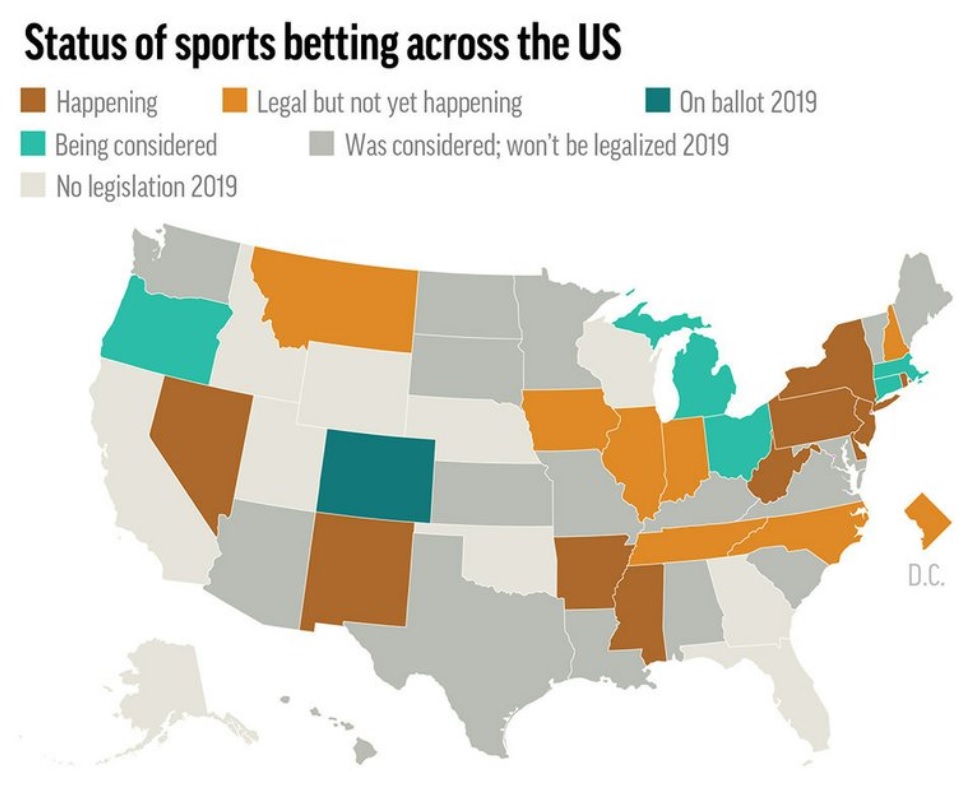
Sports betting is days away from becoming legal in Indiana
INDIANAPOLIS (AP) — Sports betting is days away fr...
William Hill US and Mescalero Apache Tribe Announce New Sports Book at Inn of the Mountain Gods Resort & Casino in New Mexico
LAS VEGAS (June 24, 2019) – William Hill US, ...