Most bettors spend their time staring at NFL spreads and NBA totals, competing against some of the sharpest lines in the industry. The books pour resources into pricing those games correctly. Meanwhile, a Korean League of Legends match or a prediction contract on a state legislative vote sits with looser numbers and thinner public action. The edges are there because fewer people are looking, and the sportsbooks know it costs them less to be slightly wrong on a Counter-Strike map total than on a Chiefs moneyline. This article is about finding those seams, sizing your bets correctly, and building a repeatable process around markets that most recreational bettors ignore entirely.
Where the Soft Lines Actually Live
Sportsbooks assign their best traders and most sophisticated models to high-volume events. A Sunday NFL slate will have lines that move in penny increments based on professional syndicate money. An esports prop on a mid-tier Valorant tournament receives a fraction of that attention.
The esports betting market is projected to grow from $12.59 billion in 2025 to $14.17 billion in 2026, with expectations of reaching $21.61 billion by 2030. That growth means books are adding more lines to capture the action, but their pricing infrastructure for these events lags behind their mainstream offerings. Esports betting currently accounts for roughly 15% of market activity, and in-play wagering makes up about 45% of total bets placed. Both of those figures point to markets where the odds are still being refined in real time, and where a bettor with specific knowledge of team compositions, patch updates, or roster changes can find genuine value.
Prediction markets represent another area worth your attention. On January 29, 2026, new CFTC Chairman Michael S. Selig announced his agency would withdraw a proposed ban on political and sports-related event contracts. The agency plans to draft new rules that establish standards for prediction markets, opening the door for platforms like Kalshi and Polymarket to expand their offerings. Contracts tied to sports outcomes, policy decisions, and state-level legislation are becoming available to retail bettors at a pace that outstrips the market makers’ ability to price everything precisely.
Stretching Your Bankroll Across Niche Markets
Alternative markets like esports props, prediction contracts, and in-play lines often carry softer odds because books dedicate less attention to pricing them. That gap is where your bankroll gets more room to work, but only if you avoid burning through it on careless stakes. Flat betting at 1 to 2% of your total bankroll per wager keeps you alive long enough to find those pricing errors.
Platforms regularly offer sign-up incentives and deposit bonuses that give you extra funds to test these thinner markets. FanDuel bonus bets, DraftKings reward credits, Stake promo codes, and BetMGM deposit matches all provide added capital without increasing your own risk. Applying those funds specifically to alternative lines lets you gather data on your approach before committing real money at full volume.
Building an Information Edge Without a Quant Degree
You do not need a machine learning pipeline to find pricing errors in niche markets, though it helps to understand what the other side is using. Modern AI systems process thousands of data points at once, including player performance trends, opponent matchup data, weather conditions, rest days, injury reports, and line movement across multiple sportsbooks. Data-driven betting tools influence over 55% of users at this point. That tells you something about how the lines get set and how they move.
Your advantage in alternative markets comes from specificity. If you follow a particular esports league closely enough to know that a team’s star player has been dealing with wrist issues during practice streams, and the book has not adjusted its line, you have information the model may not have ingested yet. The same applies to prediction contracts. If you track state legislative committee votes on sports betting legalization in Texas, South Carolina, or Oklahoma, you can price those contracts more accurately than a generalized model can.
The goal is a consistent 2 to 5% edge on your selections. That sounds small. Over hundreds of bets, it compounds into real returns, provided you maintain discipline on your unit sizes and do not chase losses.
Timing and Line Shopping in Thin Markets
Thinner markets tend to have more variation in pricing across different sportsbooks. A totals line on an esports match might differ by a full point between 2 platforms, and the juice on each side can vary by 10 to 15 cents. Line shopping matters everywhere, but it produces larger gains in markets with less liquidity.
Timing also plays a role. Opening lines in alternative markets tend to be softer because the books use less sophisticated models to generate them. If you can get your bets in early, before public money and sharp action force corrections, you capture the best available numbers. In-play lines during esports events move quickly and sometimes overcorrect after a single round or map, creating spots where the live odds lag behind what the actual game state suggests.
Staying Legal and Staying Informed
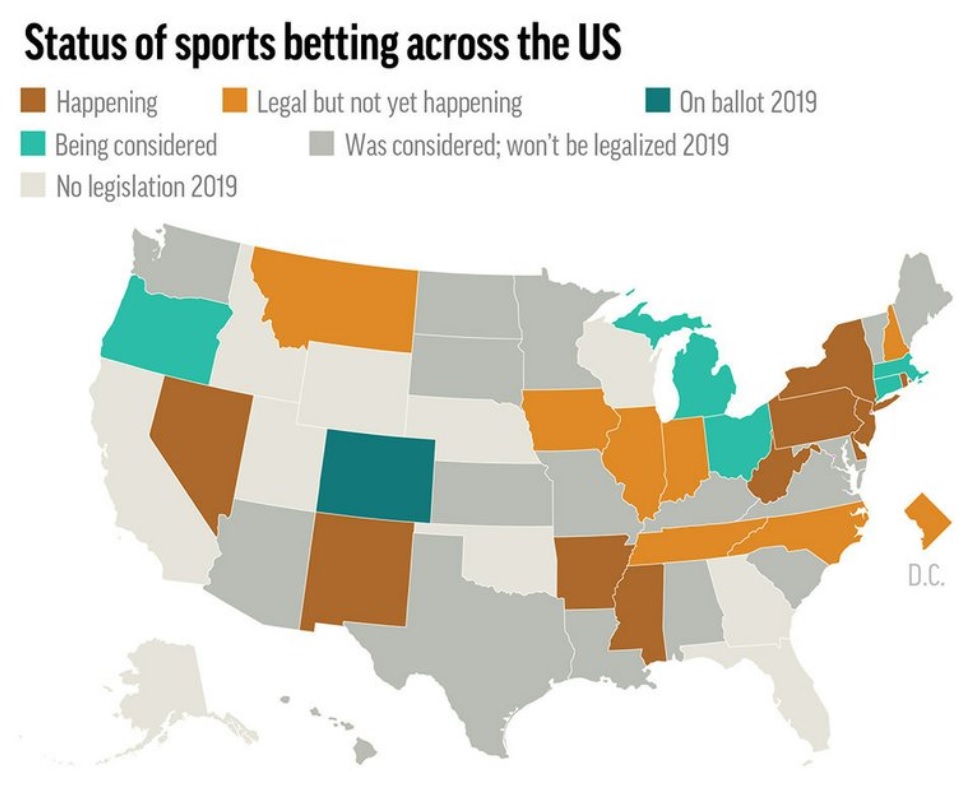
Sports betting is available in 39 states along with Washington D.C. and Puerto Rico. But legality varies by market type. Prediction contracts operate under different regulatory frameworks than traditional sportsbook wagers, and the rules are still being written at the federal level. Keep track of which platforms are licensed in your state and which contract types are permitted before placing money.
Repeating What Works
The process here is straightforward. Find markets where the books invest less in their pricing. Develop specialized knowledge in 1 or 2 of those areas. Manage your bankroll with flat stakes at 1 to 2% per bet. Use promotional funds to test your approach. Shop lines aggressively across platforms. Track your results over a meaningful sample size, at least 200 to 300 bets, before drawing conclusions about your edge. The bettors who profit from alternative markets treat it as a system, not a series of guesses. That discipline is the part most people skip, and it is the part that matters most.

Half of US offers legal sports betting as NFL season begins
EAST RUTHERFORD, N.J. (AP) — More than half of the...

William Hill Sportsbook Officially Opens at Capital One Arena in Washington, D.C.
WASHINGTON, May 26, 2021 /PRNewswire/ -- Marking a...
Online sports betting sites score as NFL season gets under way
BOSTON (Reuters) - Top online sports betting servi...
Sports betting is days away from becoming legal in Indiana
INDIANAPOLIS (AP) — Sports betting is days away fr...
Nasdaq dealing in Sports Betting
Nasdaq Inc. is lending its technology an...