

Why Eastern Europe Is a Hotspot for Sports Betting Growth. By Marko Mitevski
During the last decade, Eastern Europe has emerged as the most dynamic part of the global sports betting industry. While well-developed markets in Western Europe and North America have each reached a certain stage of saturation, Eastern European countries are experiencing a very rapid growth of online betting, the launch of new technologies, and the modernization of regulations.
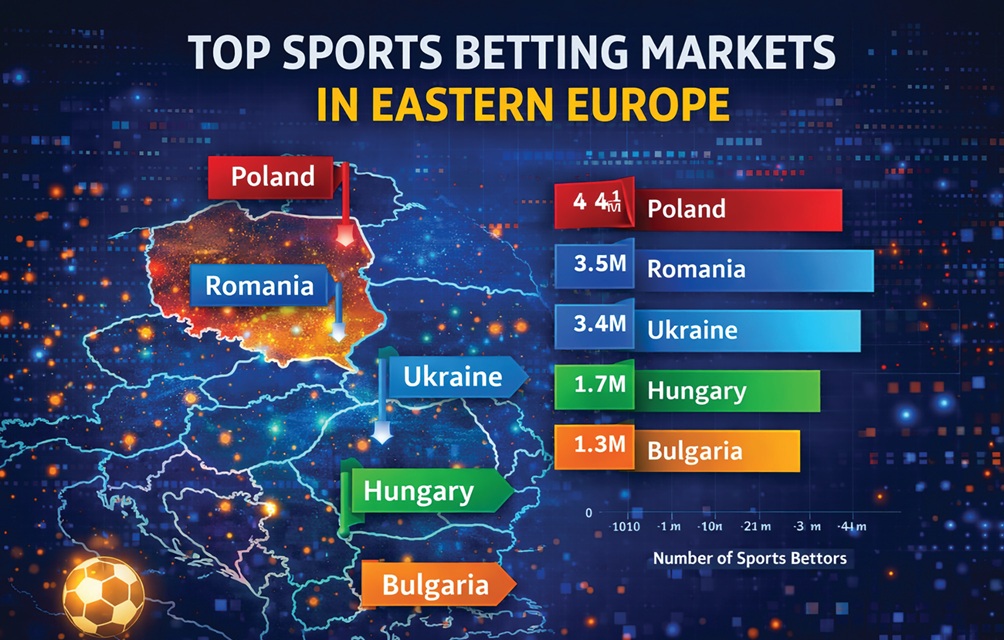
Among the key contributors to the region turning into a solid growth engine for operators and investors are the mix of rapid digital adoption, deeply rooted sports culture, and the progressing legal framework. The Eastern European betting market covers the area from the Baltics to the Balkans and from Central Europe to the Black Sea. It is no longer a fringe area. It is becoming a core part of the market strategies of global gaming companies and local entrepreneurs who see great potential in the relatively underserved online and retail channels.

Digital Transformation and Mobile Penetration
The fast digitization of day-to-day life in Eastern Europe has been one of the biggest forces behind the development of gambling in the area.
Easy access to smartphones, improved broadband infrastructure, and affordable mobile data packages have transformed the market for online sports betting and betting apps into rapidly growing sectors. In some countries, consumers have bypassed the older desktop, heavy internet era and directly embraced mobile-first experiences, so app-based gambling has become a natural extension of their digital lifestyles.
Several Eastern European countries have come up alongside online platforms, unlike the more mature markets where the retail betting shops were the only dominant force at the beginning. This has given the operators a chance to develop lean, tech-powered models without the heavy legacy costs of a large brick-and-mortar network.
The younger populations are also acting as an accelerator for this trend. A digitally native community, who are comfortable with e-wallets and using fintech services, easily accommodate the betting habit within the larger internet entertainment world which includes the streaming of sports, esports, and social gaming.

Regulatory Liberalization and Market Formalization
Legal clarity remains one of the biggest reasons for the rapid climb of the region. During the last decade and a half, political authorities in countries of Eastern Europe have completely reformed gambling laws to pave the way for easier regulation and taxation of sports betting. The local legislations are intended to discourage unlicensed foreign operators, raise government incomes and at the same time safeguard consumers. The laws are designed to deter unlicensed offshore operators, increase government revenues and also protect consumers. For instance, Poland and Romania have set up detailed licensing frameworks that permit both domestic and international players to operate in the market under clearly defined compliance standards. Alongside, the Czech Republic has updated its gambling laws to be in line with the wider European norms, thereby facilitating transparency and Union has had an impact on the regulatory frameworks in a good number of places in the region. Gambling laws are still the prerogative of each country but the EU rules on competition and cross-border services have encouraged some countries to move towards more open-regulated systems. This has helped to raise investor trust and lower the risk of litigation.
Consequently, the conversion of gray or unregulated markets into licensed ones has attracted considerable funds into the industry. Besides, tax revenues have gone up, consumer protection measures have become better, and established players have felt more secure to put their money in marketing, sponsorships, and technology.
A Deep and Passionate Sports Culture
Eastern Europe’s gambling surge would have been unimaginable without the region’s strong passion for sports Unsurprisingly, football is still the king there, local leagues have their loyal supporters and international tournaments attract millions of viewers.
One example is UEFA Champions League and English Premier League, which attract millions of viewers in the countries of Eastern Europe leading to a rise in in-play and pre-match betting. When the FIFA World Cup rolls around, the record-breaking number of bets made often exceed the national records set previously.
In addition to football, basketball has a great following in some countries of Central and Southeastern Europe. The NBA’s reach into the inner-city culture of the youth has been deep and therefore, more betting options are available across different time zones. Also, tennis, handball, volleyball, and to some extent esports, have contributed to building a more diverse betting portfolio.
This comprehensive sports participation guarantees that sportsbooks cannot be left without a product due to reliance on just one competition; that is why they always have an offer for betting at any time of the year. They can thus, efficiently manage fluctuations in seasons and generate steady income streams.
Competitive Costs and High Growth Potential
Compared to Western European countries, the markets in Eastern Europe generally provide cheaper operational costs and more room for growth. Wages, advertising, and getting customers through buying are some of the costs that could be considerably cheaper especially in the case of not very competitive markets. Eastern Europe is a planned expansion area for global operators like Bet365, Flutter Entertainment, and DraftKings. To convey, these major players are facing escalating difficulties along with regulatory barriers in over-saturated markets and, on the other hand, the eastern region offers them the possibility to be pioneers by getting first-mover advantages.
At the same time, local players do quite well by adjusting the offering to the tastes of the local customers, providing local language support, push with regional, specific deals, and accept deposit/withdrawal via cards which are tied to the domestic banking system. This kind of double-barred situation where multinational brands and nimble local companies coexist offers innovation and keeps the pressure on pricing.

Innovation in Payments and Fintech Integration
Financial technology continues to be an instrumental factor in the substantial facilitation of the betting sector’s growth. In numerous countries across Eastern Europe, the local traditional banking systems were, for one reason or another, quite underdeveloped or not readily accessible to all the citizens. Yet, the upsurge in the usage of digital wallets, prepaid cards, and mobile banking services has truly been at the core of extending financial inclusion.
This whole ecosystem aligns with the interests of betting operators. After all, flawless and easy deposit & withdrawal processes greatly contribute to the overall customer satisfaction level. In those markets where the general public has a wary attitude towards the use of credit cards, alternative payment methods, be it through regular bank transfers or via fintech platforms, effectively serve as a bridge between the two parties.
On the other hand, cryptocurrency has also, to some extent, been incorporated into the mix of payment methods in certain areas. Some operators are even at the stage of testing transactions based on blockchain technology. Even though different regulatory environments mean that digital assets are treated differently in various jurisdictions, the readiness for technological innovations that one can observe in the majority of Eastern European markets still sets them apart from the rest of the world with comparatively stricter regulatory regimes.

Demographic Momentum and Youth EngagementEastern
European demographics make the environment even more conducive for gambling growth. For instance, in Hungary and Serbia, a big chunk of the population is in the 18-40 age group, which is the main target for online gambling operators.
The younger generation tends to use live betting, bet on mini-markets, and enjoy gaming features more than the older users. Besides that, they are more adaptable to social media advertisements, influencer tie-ups, and sports sponsorships.
The role of social media in this has been crucial as far as the effects are concerned. Gambling companies are teaming up with sports content creators and local celebrities to attract the attention of potential customers. Along with real-time statistics and live streaming, live betting odds embedded in sports applications offer highly engaging betting opportunities that are very attractive to the technologically advanced youth.
Retail Betting’s Continued Relevance
Even though online platforms garner most of the media recognition, retail betting shops remain a significant part of the market in some areas of Eastern Europe. In certain countries such as Bulgaria and Croatia, betting shops are very much a part of the scene not only in city centers but also in smaller towns.
Local people often use these shops as venues to meet, talk about the game, and watch the matches together. The operators view retail presence as a way of increasing the number of people who recognize their brand and thus being able to gain the trust of the customers, especially the seniors, who may prefer to make transactions in person.
The combination of online and offline sales channel is known to be very effective. Clients who register their accounts on the web can later make a deposit at the shop and have the option to withdraw their winnings through different channels. In this way, the company provides a smooth service that will result in repeat purchasing.

The Role of Foreign Investment
Foreign direct investment has been a major catalyst for industry growth. International players come with capital as well as know-how in risk management, marketing analytics, and responsible gambling frameworks.
Private equity and venture capital have also looked at betting startups in Eastern Europe as a source of potential. Due to the region’s relatively fragmented market, the investors can, through consolidation of smaller operators, technology scaling, and targeting of regional or international expansion, create value.
Local brands entering strategic partnerships with global technology providers result in better platform performance, security, and user interface design. This transfer of expertise has raised the bar in the whole industry, thus Eastern European sportsbooks are now on a par with their Western rivals.
Challenges and Responsible Gambling Considerations
However, the area is not without its problems even after remarkable growth. There is still concern about regulatory volatility in some areas, where sudden tax hikes or advertising restrictions may upset the business models. Political changes sometimes bring back old policies, thus operators and investors find themselves in a state of uncertainty.
The ecosystem of responsible gambling measures is being updated as well. When wagering activity escalates, governments and advocates tend to focus more on consumer safety measures like deposit limits, self-exclusion schemes, and awareness-raising campaigns.
The issue of social responsibility versus revenue generation will undoubtedly determine whether a business will be able to continue in the future. The companies that take the lead in using player protection technology and offering transparency through their reports will most probably be the ones to withstand the market pressure in the long run.

Regional Diversity and Cross-Border Influence
Eastern Europe is definitely not a single entity. There are the Baltic nations, Central Europe and the Balkans that all have different regulatory frameworks, cultural traditions and economic situations. However, across-the-border impacts are quite strong.
Sports competitions broadcast on TV go beyond the separation of countries, and local rivalries often increase the level of betting excitement. Betting companies that have obtained a license in one market often consider expanding into the markets of the neighboring countries, thus taking advantage of the language and cultural similarities.
With continuous development of the infrastructure and stabilization of regulatory frameworks, greater regional integration can become a reality, through acts like shared liquidity pools or harmonized standards, and in that way further growth can be stimulated.
Looking Ahead: Sustainable Expansion or Temporary Surge?
One of the things that industry analysts are wondering is whether the sports betting boom in Eastern Europe is a long-term phenomenon or a short-term surge caused by regulatory liberalization and novelty. The current signs point to a lasting trend.
More people are adopting digital trends, sports fans continue to be part of the local identity, and governments do not seem to be willing to undo legalization that leads to substantial tax income. Besides that, as Western European markets are tightening advertising and compliance rules, operators might be mainly looking at the east for expansion.
At the same time, there will be more competition. Margins might get squeezed when more brands enter the space, and customer acquisition costs could go up. The ones who win will probably be those who utilize technological expertise, have a good grasp of the local situation, and are highly compliant.

William Hill Sportsbook Officially Opens at Capital One Arena in Washington, D.C.
WASHINGTON, May 26, 2021 /PRNewswire/ -- Marking a...

Half of US offers legal sports betting as NFL season begins
EAST RUTHERFORD, N.J. (AP) — More than half of the...

Online sports betting sites score as NFL season gets under way
BOSTON (Reuters) - Top online sports betting servi...

William Hill US and Mescalero Apache Tribe Announce New Sports Book at Inn of the Mountain Gods Resort & Casino in New Mexico
LAS VEGAS (June 24, 2019) – William Hill US, ...

Nasdaq dealing in Sports Betting
Nasdaq Inc. is lending its technology an...