
Why the World Cup is the most misunder stood commercial opportunity. By Mark McGuinness
The 2026 World Cup tournament will be shared between Canada, Mexico and the United States in June. It will be bigger, louder and structurally different from anything our industry has seen in the last 30 years. For sports book leaders, the real risk is not missing the upside but fundamentally misreading where betting value is actually created.
By the time the opening whistle blows at the FIFA World Cup 2026, it will be my seventh World Cup working on the B2C operator side of the industry. My first was 2002. Over more than two decades, I have experienced the same cycle repeatedly: ambitious forecasts bullish acquisition targets, and post-tournament recalibration when expectation and reality fail to align.
World Cups matter. They always have.
For sports book boards and executive teams they represent a rare convergence of cultural relevance, global attention, and brand salience. Few events promise the same potential for first-time depositors, mass reactivation and short-term revenue acceleration.Yet experience teaches an uncomfortable truth. The World Cup is consistently misunderstood as a commercial engine for sports books. The expanded, 2026 format risks magnifying that misunderstanding rather than correcting it.
Bigger Tournaments do not Create Linear Growth
On paper, the new World Cup 2026 format looks irresistible. Forty-eight teams. More matches. More days. More content inventory. More opportunities to trade.
The implicit assumption is simple: More fixtures should equal more bets, more bettors and more revenue. It’s the Poisson distribution curve, right? But betting behavior does not scale mathematically. It scales emotionally.
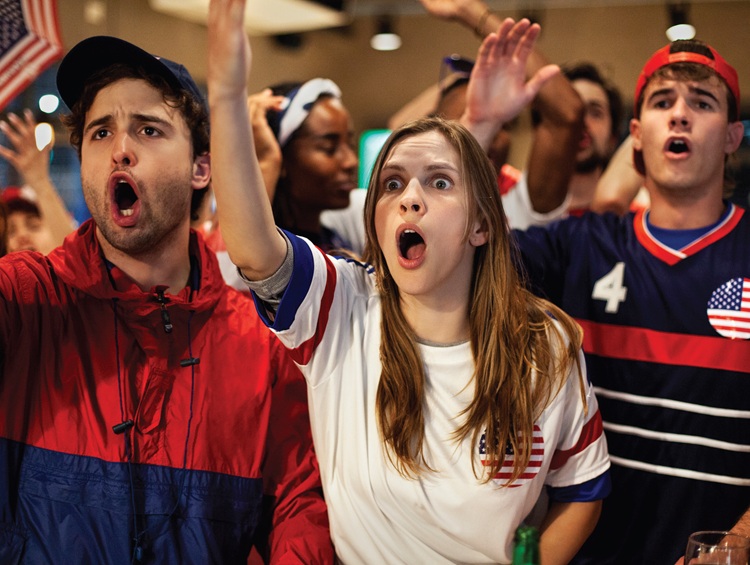
Across every World Cup I have worked on, one force dominates all others: patriotic betting. Punters overwhelmingly bet with their hearts. They follow their nation, their flag and their collective belief. Rational pricing models, form analysis, and expected value calculations are frequently overridden by national pride and national-team progression.
This is not a marginal behavior. It is the primary driver of World Cup betting volume.
When a national team progresses, betting activity accelerates. When that team is eliminated, interest drops very sharply and immediately. No CRM flow, bonus mechanic or push notification fully compensates for that emotional cliff edge.
An expanded group stage does not dilute this effect. In many markets, it prolongs uncertainty before emotional intensity truly peaks, which can actually suppress engagement in the early phases of the tournament.
Emotion over Logic and some Lessons
“Patriotic betting” refers to the tendency of gamblers, often described as patriotic punters, to back their home nation regardless of objective probability. It is emotional, not analytical and I’ve had many an argument with sports-book trading directors on this concept.
During major international tournaments, fans bet to express belief as much as to seek return. They are buying hope, identity and shared experience. This behavior has tangible commercial consequences.
We have seen numerous examples where a surge of patriotic money materially shifts operator risk. During the Women’s Euro 2025 final, British bookmakers such as Ladbrokes, reported losses after overwhelming support for the England Lionesses paid out.
Conversely, when national confidence is low, patriotic betting weakens. In the early stages of Euro 2024, UK betting volumes on England lagged noticeably behind markets such as Portugal and Spain, where belief and not probability, drove betting behavior.
The lesson is simple: Betting interest is inseparable from emotional confidence. World Cup formats do not change this. They merely redistribute when – and how intensely – that emotion is expressed … in physical bets placed.
The Problem few Executives want to Discuss
The second structural challenge is competitive balance. World Cups generate their strongest betting engagement when matches feel meaningful and uncertain. Tight spreads. Credible underdogs. Narrative tension across social media channels.
Expanded tournaments inevitably increase the number of mismatches. Heavy favorites. One-sided fixtures. Odds so short they fail to stimulate meaningful betting depth.
A 10–0 scoreline may generate highlight clips but it rarely generates sustainable betting volume. From a trading perspective, these matches produce shallow markets, limited bet diversity and low repeat engagement.
They fill schedules. They do not build margin. For leadership teams, this matters because volume without intensity is a poor substitute for value.
Fan Backlash = Betting Risk
Rising ticket prices and accessibility concerns are often dismissed as fan or media issues as why have seen lately. They are not.
Fan sentiment directly influences betting. When supporters feel alienated, priced out or disconnected, their engagement patterns change. They watch differently. They bet differently. Sometimes, they disengage entirely. Sports betting is not insulated from the fan experience. It is an extension of it. A tournament perceived as bloated or over-commercialized risks weakening the emotional energy that fuels betting behavior in the first place.
New Audiences or Cannibalized Spend?
A persistent boardroom question is whether World Cups genuinely expand the betting audience or simply rearrange existing spend. My experience suggests the latter is far more common.
Major tournaments tend to redistribute attention, not create sustained new bettors at scale. Casual users appear briefly, driven by national narratives and sign-up offers, then disappear once those narratives and offers end. Acquisition spikes are often followed by steep drop-offs. Without a deliberate, post-tournament migration strategy, World Cup activity frequently cannibalizes existing fixed-odds and sports book spend rather than growing lifetime value.
Predictions, Props and the Illusion of Innovation
The growth of prediction markets, micro-bets and alternative engagement formats adds another layer of complexity. These products lower barriers to entry and align well with short attention spans. Why? They feel social, intuitive and accessible. But leaders must ask a harder question: What do they replace? If innovation merely fragments liquidity and diverts spend from higher-margin core products, headline
engagement metrics can look healthy while underlying economics quietly erode. Performance alone is not the metric.
Displacement matters micro-bets and alternative engagement formats adds another layer of complexity. These products lower barriers to entry and align well with short attention spans. Why? They feel social, intuitive and accessible. But leaders must ask a harder question: What do they replace?
If innovation merely fragments liquidity and diverts spend from higher-margin core products, headline engagement metrics can look healthy while underlying economics quietly erode. Performance alone is not the metric. Displacement matters.
What the Dashboards rarely Show
Operational dashboards will track registrations, turnover and bet counts in real time.
They rarely reveal:
• How emotionally fragile engagement becomes after national elimination
• How much World Cup activity is incremental versus inevitable
• How little of that behavior survives beyond the final
• How sharply value drops once belief disappears
World Cups are not traditional acquisition events. They are emotionalamplification events – and amplification cuts both ways.
Final Prediction
World Cup 2026 will be the biggest tournament in history. It will dominate attention, conversation and calendars. But size is not strategy. Having worked through six previous World Cups, I have learned that
sports books are rarely undone by the tournament itself. They are undone by financial assumptions carried into it. World Cups do not fail operators. It is misaligned expectations between the C-suite, marketing teams and tradingteams that do. For leaders prepared to challenge the narrative, 2026 World Cup remains a powerful opportunity and just not the one most forecasts suggest. And in the sports book and sports betting industry, built on probabilities, realism remains one of the most under-priced assets we have.

Half of US offers legal sports betting as NFL season begins
EAST RUTHERFORD, N.J. (AP) — More than half of the...

William Hill Sportsbook Officially Opens at Capital One Arena in Washington, D.C.
WASHINGTON, May 26, 2021 /PRNewswire/ -- Marking a...

William Hill US and Mescalero Apache Tribe Announce New Sports Book at Inn of the Mountain Gods Resort & Casino in New Mexico
LAS VEGAS (June 24, 2019) – William Hill US, ...
Sports betting is days away from becoming legal in Indiana
INDIANAPOLIS (AP) — Sports betting is days away fr...
Online sports betting sites score as NFL season gets under way
BOSTON (Reuters) - Top online sports betting servi...