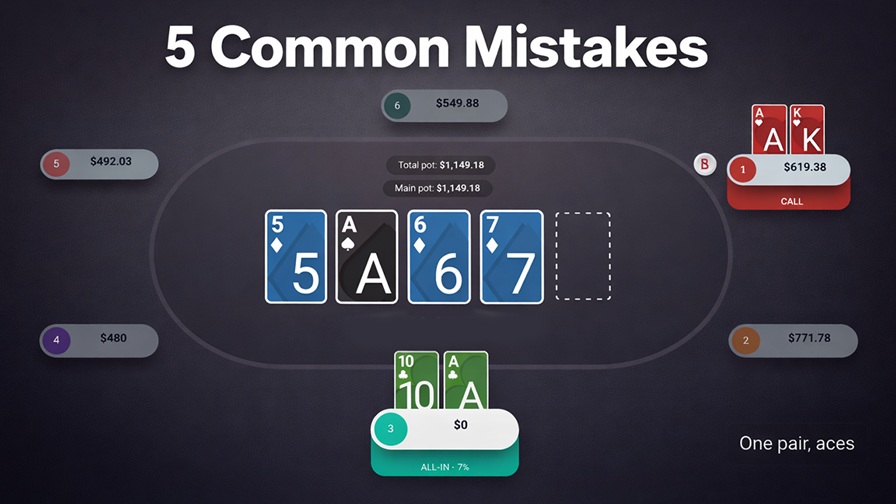

It doesn’t make a difference if you’re new to the game or consider yourself a veteran. I see so many mistakes from both players at the table, that makes me question how good some people think they really are. If you take a minute and humble yourself maybe you will start to admit you’re not as good as you could be.
Which is why I will be going over 7 common poker mistakes you really need to avoid if you want to start winning consistently. Because if we are honest, losing is not fun. Especially when it’s due to one of these mistakes.
Playing Too Many Hands
Look, you don’t want to be the guy opening from first or second to act with 4 6 suited. Sure, every once in awhile if you want to spice things up go for it, but don’t make a habit out of it. You really want to play premium hands from early position like AK, KQ, or mid pocket pairs with the occasional suited connectors.
If you stick to the script and don’t get too out of line, you will find that sometimes it’s better to let your opponents bluff and keep things basic. This is especially true if you are a low or mid-stakes player. Really no need to get fancy.
Chasing Draws Without Good Odds
This is another common mistake I see all the time. Sometimes it’s just not worth calling someone down to the turn of river if the odds don’t make sense. For example, if you know you’re behind and an opponent puts out a raise that’s going to cost you half your stack on a draw why make the call?
What I think happens to most people in these situations is they let their impulses get the best of them when folding is the best play. Something I’ve learned is that a good fold can make as much money as a big win. It’s a weird thing to think about, but if the odds don’t make sense to call on a draw just fold. You will save yourself a lot of money down the road.
Ignoring Position
This ties into the first mistake. But if you’re not paying attention to your position at the table, you’re pretty much dead in the water before a hand begins. For example, if you are first or second to act stick to only premiums. If you are in a mid-to-late position you shouldn’t be defending with hands like 10 7 off suit. This is the kind of thing that gets you in trouble when the flop comes. Because if you pair your 10 there is a good chance, you’re behind someone who raised in early position. Also, from experience a lot of the time your kicker in these spots is never going to be good, so it’s just another example of what not to do when you’re in a session.
Under Bankrolled
There is a lot of debate on how many buy ins you should have for the stake you’re playing. I’ve always stuck with the 20 to 30 buy in range mainly because that is enough to see if you’re good enough to beat the players in these games. If you find yourself slightly losing or breaking even that’s actually not a bad spot to be in. Because small improvements can get you over the hump to becoming a winning player at that level. You should play around 10k hands per month to get an idea if you are winning or not. That’s a pretty good baseline in my opinion.
Playing Emotionally
Lastly, you need to not play this game when emotions are high. I’ve lost a lot of money when I’ve played in a bad mood or even tired when the best thing was for me to stay away from the game completely. Another reason for playing emotionally is taking a bad beat when your pocket queens lose to pocket jacks preflop and for whatever reason you just can’t handle it. These types of things happen all the time in poker, there is no way around it.
In these moments I like to reflect and sometimes just quit for the day completely. Other times I will take a walk or break and come back to the game later when my heads on straight. This is a skill you need to develop to handle the variance that will come eventually. Because no one wins every time they play it’s a fact.
Not Taking Advantage of Rakeback
One other thing worth looking into if you want to dabble into the world of online poker is rakeback. This is something that allows you to get money back weekly or monthly just for playing on a site. Pokerstacked.com has some information on this that could help you out if you are looking to play more online.
Final Thoughts
The longer and more time you put into poker the better you should be getting at it. If you are not, then something is wrong and needs to be fixed. The way I approach all of this is by looking at the game as something long term. I don’t try and force action with bad hands when it doesn’t make sense, and if I bluff, I must believe it’s going to work, or I won’t pull the trigger.
Overtime if you stop making some of these mistakes you should see more winning sessions than losing sessions. The way I think about improving at poker is that your essentially building skills and stacking each one on top of each other, so you eventually become an unstoppable force at the table.
There is no quick fix to get good at this game. You just need to understand the fundamentals, different concepts, and not tilt when variance comes knocking. Because variance is always going to be a part of poker. With that said, if you stop making some of these common poker mistakes you may find yourself a lot more profitable over the course of the next few months to years down the road.
Frequently Asked Questions
What is the most common mistake beginner poker players make?
One of the biggest mistakes new poker players make is playing too many hands. Many beginners feel pressured to stay involved in every pot, even when they have weak starting cards. Over time, this leads to difficult situations and consistent losses. Winning players are selective and wait for strong hands, especially when they are in favorable positions at the table.
Why is position so important in poker?
Position determines when you act during a hand relative to the other players. Acting later in a betting round gives you more information about your opponents’ actions before you make a decision. This advantage allows players in late position to control the pot, bluff more effectively, and make better overall decisions.
Is chasing draws like straights or flushes a good strategy?
Chasing draws can be profitable in the right situations, but doing it too often is a costly mistake. Skilled players consider pot odds and the size of the bet they are facing before deciding to call. If the potential reward doesn’t justify the risk, folding is often the smarter long-term decision.
What does tilt mean in poker?
Tilt refers to playing emotionally after experiencing bad luck or a frustrating loss. When players go on tilt, they often abandon their strategy and start making impulsive decisions. This can quickly turn a small loss into a much larger one if emotions take control.
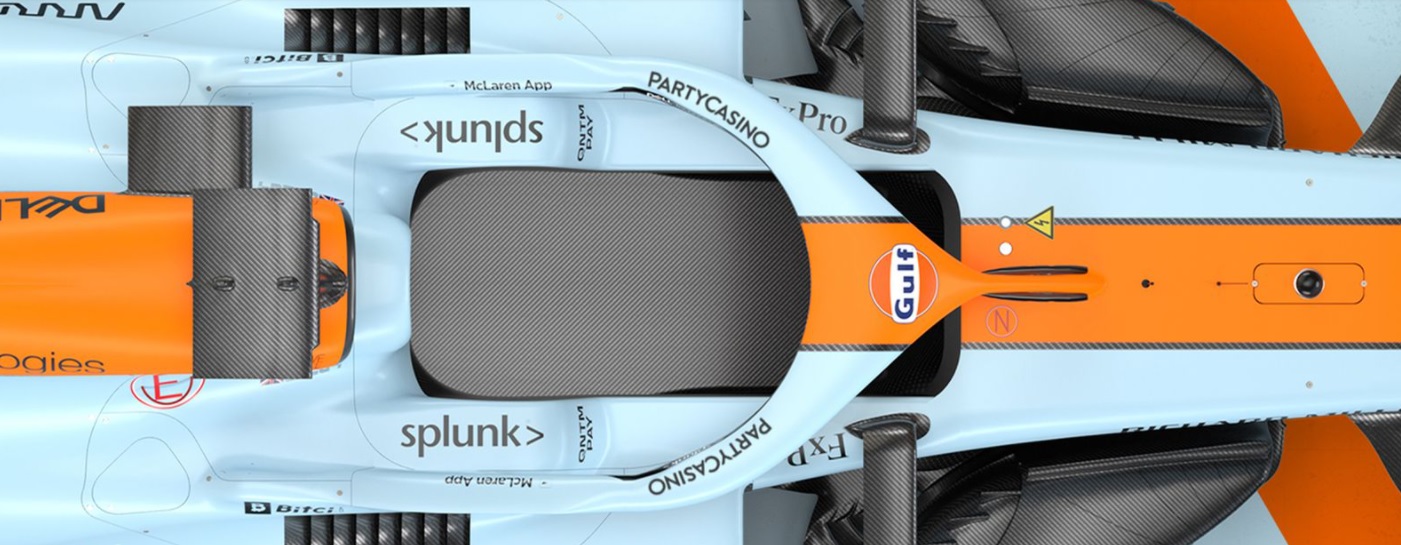
McLAREN RACING ANNOUNCES NEW PARTNERSHIP WITH ENTAIN BRANDS, PARTYCASINO AND PARTYPOKER
PartyCasino and PartyPoker brands to feature as te...

The owners of FanDuel and PokerStars have struck a $12 billion deal to create the world's biggest online betting
The owners of FanDuel and PokerStars have struck a...

Online sports betting sites score as NFL season gets under way
BOSTON (Reuters) - Top online sports betting servi...

Quick On The Draw
Ribbon-cutting at Valley Forge Casino Resort, Marc...
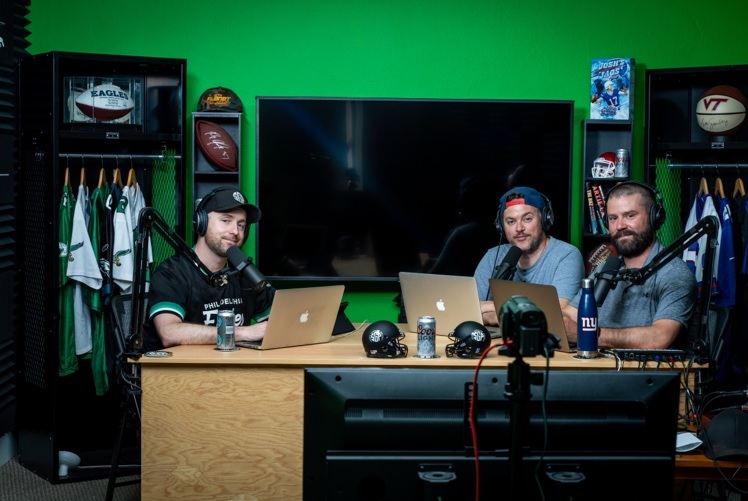
Sports Gambling Podcast Network (SGPN) COLBY DANT RECORDS 130 PODCASTS PREVIEWING EVERY FBS COLLEGE FOOTBALL TEAM
LOS ANGELES, Calif. (August 4, 2021) – In an unpre...