What the data really tells us about risk and responsibility
Today, the African gambling market is developing rapidly. Both local and global brands compete for players’ attention and engagement across dozens of countries. And increasingly, experts note that success in Africa depends on a systematic approach to responsible gambling and player safety.
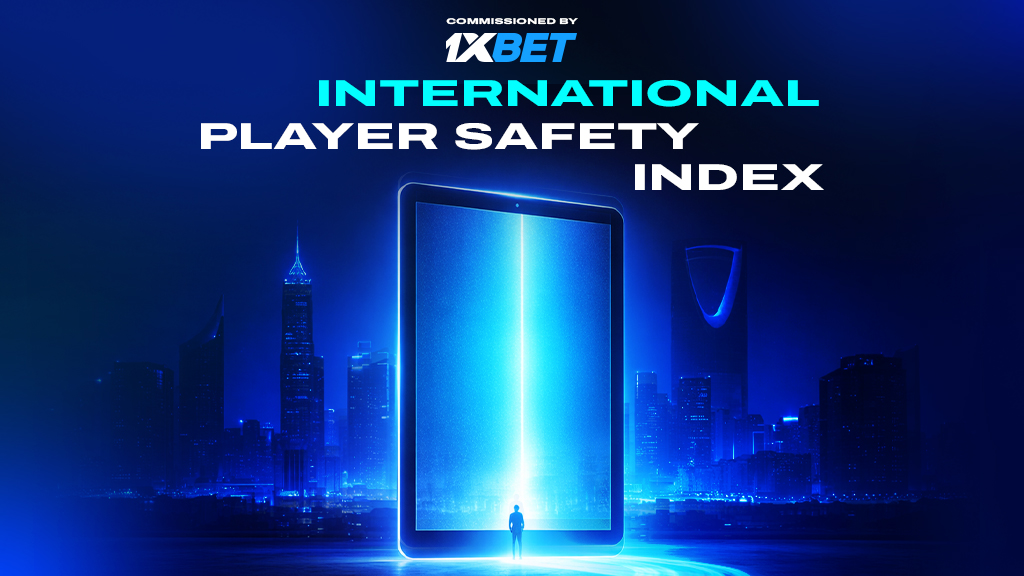
New data on this issue was provided by a large-scale study conducted by 1xBet. One of its main objectives was to assess the current level of player protection in African markets. Using the African Player Safety Index, the researchers sought to identify problem areas and evaluate the balance between market growth and user safety. They also aimed to determine which countries are committed to player safety and which still need significant changes.
What the Statistics Show
It is worth pointing out that the majority of study participants believe gambling regulation requires improvement. Sixty-eight percent of respondents rated the effectiveness of local legislation as between five and eight on a 10-point scale. This result broadly aligns with the figures recorded in Europe, but the regulatory landscape in Africa is far more uneven.
Compared to Europe, a slightly higher share of operators in Africa actively implement KYC (Know Your Customer) procedures – 75 percent versus 74 percent in Europe. At the same time, collecting player data alone does not always lead to active engagement. The promotion of responsible gaming remains insufficient.
Kenya and Nigeria are considered the continent’s leaders in regulatory quality and the willingness to establish clear industry rules. However, the Democratic Republic of the Congo, Benin and Cameroon still lack high-quality, transparent regulations capable of ensuring player safety. Even when African operators match their European counterparts in technological sophistication, this does not guarantee that players receive timely support in self-monitoring and self-restriction.
Risks for Players
The study identified several issues that operators in Africa consider critical for both industry development and player safety. The primary concern was the lack of regulatory clarity. When the legal framework is not standardized, even within a single country, operators struggle to understand the limits of their responsibility and players are unable to self-regulate. Operators rated this issue at an average of seven out of 10, highlighting it as a top priority.
Another important distinction from Europe is that many African players view betting as a means of achieving financial stability. They perceive restrictions as barriers and adopt increasingly aggressive strategies, which lead to losses.
This lack of clarity leads to chaos, market shadowing, and systemic risks for both players and licensed operators. For example, in Cameroon and Zambia, players actively place bets with semi-legal or entirely illegal bookmakers. In several countries, the slot-machine segment has almost fully moved into the shadow economy. All this leads to an increased risk of gambling addiction. Under these conditions, the state loses control over security and the problem becomes persistent.
Operator Responsibility
As noted earlier, KYC methods are actively used. Various studies enable operators to gain a deeper understanding of their players and behavioral patterns. Even within an imperfect legal framework, KYC tools help identify problem players.
Another important mechanism involves marketing filters. An increasing number of companies are introducing limits on high-pressure advertising and bonus offers. Yes, a company may lose out to more aggressive competitors at some point, but these measures are strategically beneficial for the market as a whole. Such restrictions help reduce players’ impulsive attempts to recover losses immediately, which is provoked by a constant stream of new bonuses.
Finally, there is growing discussion around the use of artificial intelligence to promptly encourage responsible play. Algorithms capable of analyzing player behavior in real time and detecting early signs of gambling addiction before they become critical are tools that many African operators are already considering.
Problems Analysis and Improvement Ppportunities
It’s important to remember that progress does not happen overnight. Nigeria, now widely regarded as one of the continent’s leaders in player safety, began implementing active reforms in this area back in 2020. Kenya, which is cited as a benchmark, spent several years revising tax laws and operator tax rates before adopting a progressive Gambling Control Act.
For countries that continue to lag behind in gambling regulation and player protection, the key priority is initiating systematic efforts. Benin has taken steps in this direction by establishing a transaction-monitoring service in 2023, an official body designed to prevent excessive gambling, particularly among minors. However, this country, along with the Democratic Republic of Congo and Cameroon, still has a long way to go.
Progress can be driven not only through legislative refinement but also through international cooperation. The exchange of data and regulatory practices between African countries, as well as European regulators and global operators, can help mitigate many existing issues. Such cooperation may lead to large-scale educational programs that inform players about the risks and the importance of responsible decision-making.
Conclusions
It should be emphasized that, despite the challenges identified in the African Player Safety Index study, the region’s overall growth rate remains exceptional. The market is increasingly adopting the most advanced tools to strengthen player protection. As a result, government regulatory frameworks need to keep pace with this rapid development.
The region is ready to embrace innovation – a position shared by the vast majority of operators who participated in the study. They are confident that Africa has enormous potential to implement global player-safety standards.
Nasdaq dealing in Sports Betting
Nasdaq Inc. is lending its technology an...

NFL Brings On-board Sportradar
Compared with other U.S. sports leagues, the NFL h...

McLAREN RACING ANNOUNCES NEW PARTNERSHIP WITH ENTAIN BRANDS, PARTYCASINO AND PARTYPOKER
PartyCasino and PartyPoker brands to feature as te...

Half of US offers legal sports betting as NFL season begins
EAST RUTHERFORD, N.J. (AP) — More than half of the...